


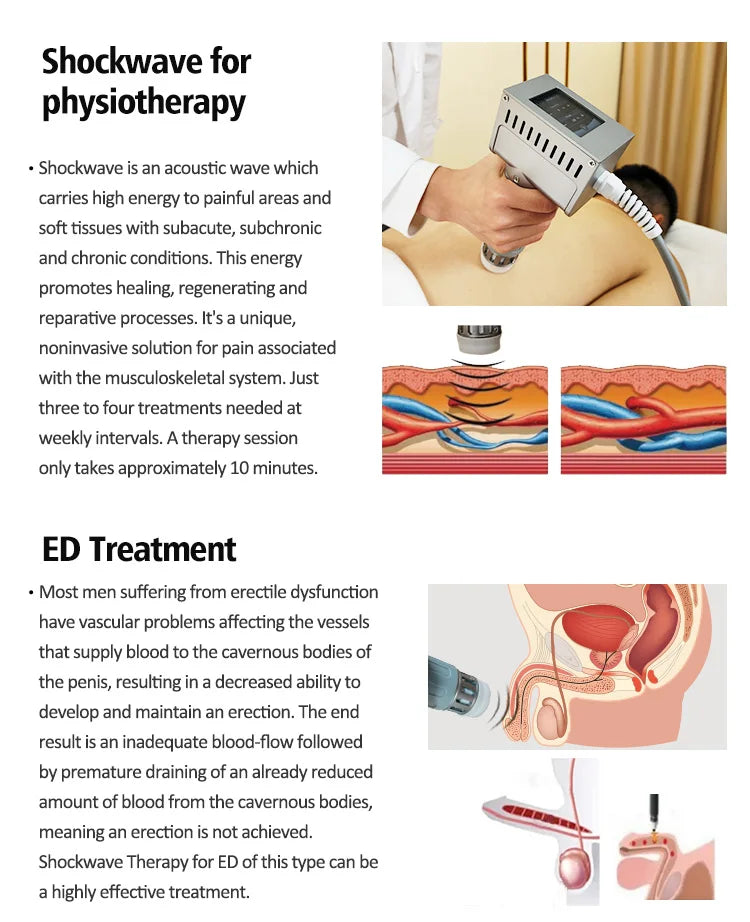
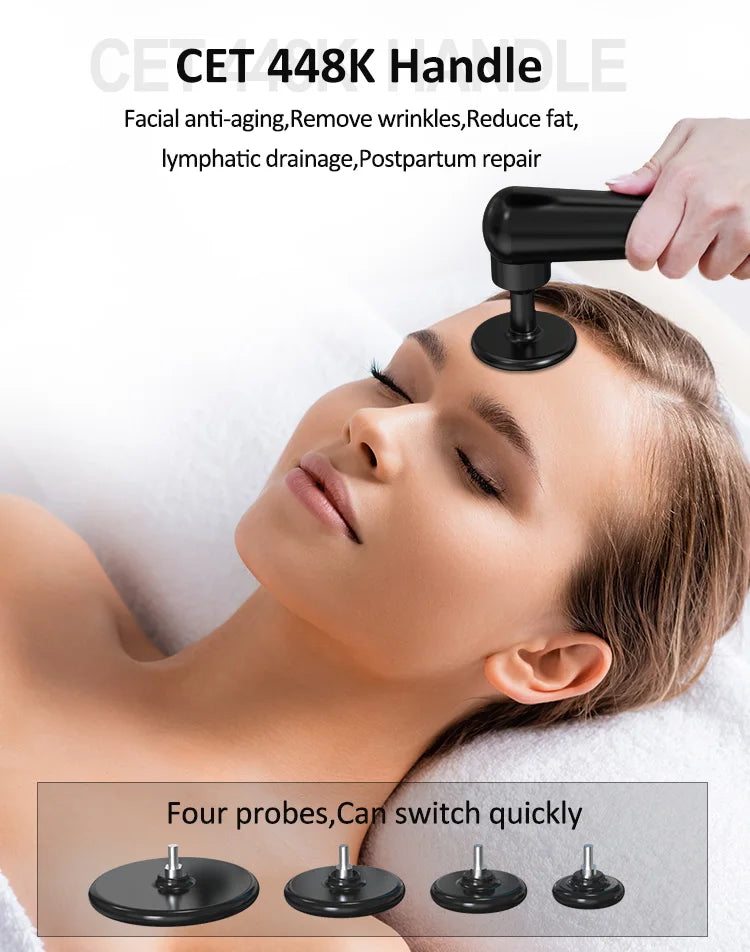
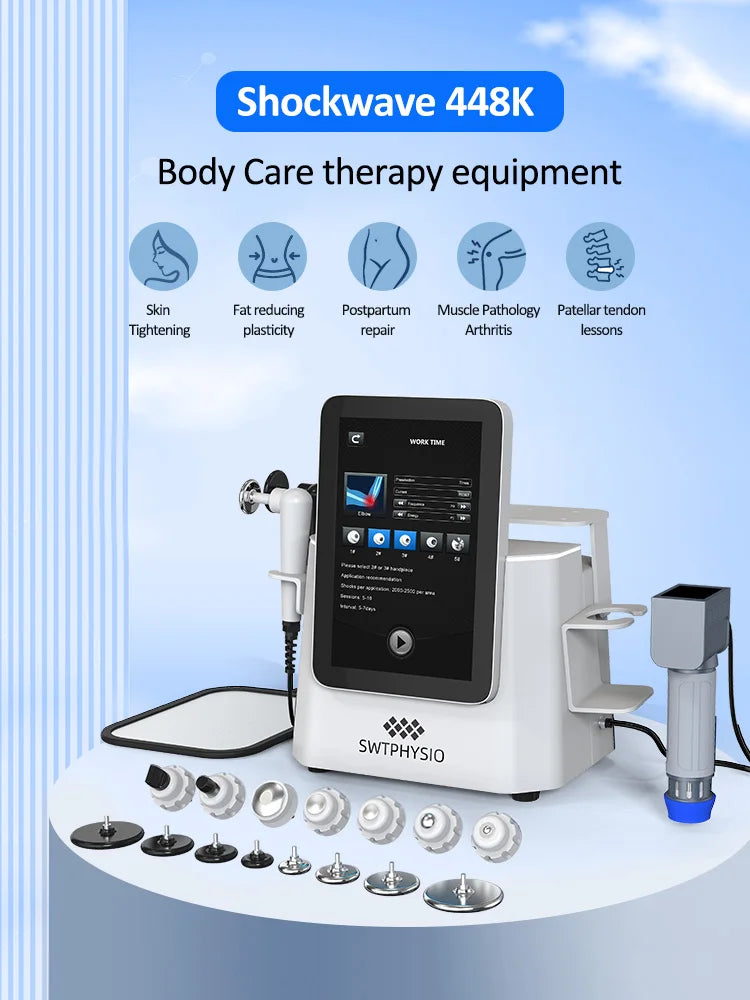
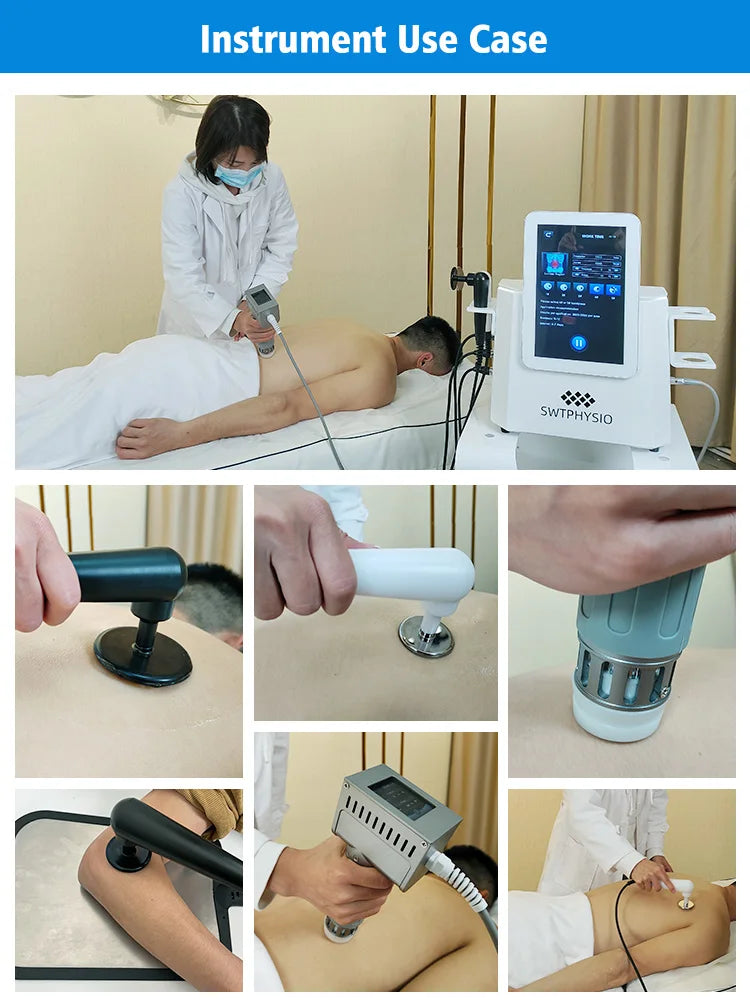


What Each Mode Actually Does
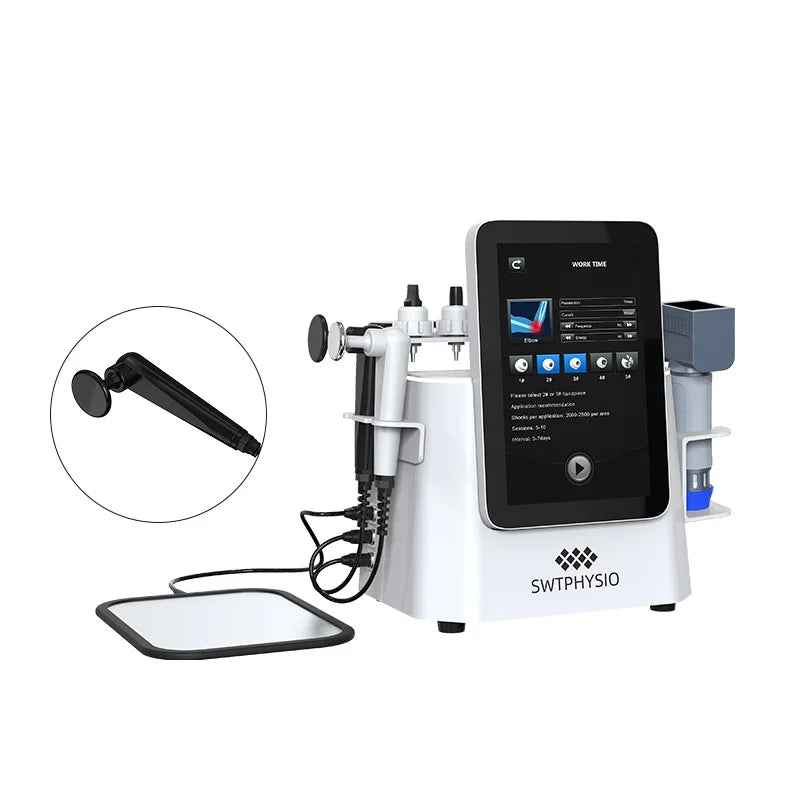
Combination machines are often sold as a feature list. Here is what each of the three modules is, in plain terms, so you can judge whether the combination matches your protocols.
CET — Capacitive
Energy transfers through an insulated electrode and concentrates in tissue with higher water content — muscle and soft tissue. Used for more superficial work and warm-up phases.
RET — Resistive
Energy transfers through an uninsulated electrode and concentrates in denser, higher-resistance tissue — joints, tendons, bone interfaces. Used for deeper targets. Output up to 180 W.
Pneumatic Shockwave
Compressed air drives a projectile inside the handpiece, producing radial acoustic pulses at 1–16 Hz. Energy spreads outward from the applicator tip across broader, more superficial areas.
Vacuum
Suction applicators lift and mobilise tissue. Commonly paired with the tecar handpieces during a session for manual-assisted work.
Radial, not focused — read this before you order
The shockwave module here is pneumatic (radial), not focused piezoelectric. Radial energy spreads from the tip and is typically applied over broader, more superficial regions. If your protocols call for focused shockwave with deeper, more concentrated energy, this is not the right unit — ask us about the A63 or B63 focused systems instead and we will tell you plainly which fits. We would rather lose the sale than send you the wrong machine.
How a Combined Session Runs
Technical Specifications
| Tecar frequency | 448 kHz (CET and RET) |
|---|---|
| RET output power | ≤ 180 W |
| Shockwave output power | ≤ 180 W |
| Shockwave frequency | 1 – 16 Hz |
| Total system power | ≤ 600 W |
| Interface | 12.1″ colour touchscreen |
| Format | Desktop / tabletop |
| Treatment areas | Face and full body — arms, hands, legs, feet, torso |
| Voltage | 110V / 220V — US / EU / UK / AU plugs available |
| Certifications | CE Certified · RoHS Compliant |
| Custom logo / OEM | Available |
| Warranty | 2 years main unit · 1 year handpieces and applicators |
Combined Unit vs Buying Separately
The real comparison is not against another 3-in-1 — it is against buying the capability one machine at a time. Both routes are valid; they suit different clinics.
| Consideration | This 3-in-1 | Separate Units |
|---|---|---|
| Entry cost | One unit | An entry-level shockwave unit alone (SW600) is $1,299, before adding tecar |
| Floor space | One tabletop | Two to three trolleys |
| Staff training | One interface | One interface per machine |
| Parallel treatment | One modality at a time | Two rooms can run simultaneously |
| Continuous duty | Suited to scheduled sessions | Floor-standing units handle higher volume |
| Best for | 1–2 rooms, testing demand, controlled budget | Established volume, dedicated rooms |
Not sure which route fits your clinic?
Tell us your room count and daily client volume — we will say which of the two makes sense, even when that means recommending separate units instead.
Who This Suits
What’s in the Box
- Main desktop console with 12.1″ touchscreen — 1 unit
- CET tecar handpiece (capacitive) — 1 unit
- RET tecar handpiece (resistive) — 1 unit
- Pneumatic shockwave handpiece with transmitter set
- Vacuum module and applicators
- Power cable — country-specific plug (US / EU / UK / AU)
- User manual — English; other languages on request
⚠️ Conductive cream is required for tecar treatment and ultrasound gel for shockwave. Tell us at order and we will quote them with the machine.
Frequently Asked Questions
Can I run tecar and shockwave at the same time?
No. The unit shares one power budget and one interface, so the modalities run sequentially within a session — which is how most combined protocols are structured anyway. If you need two modalities running in two rooms at once, buy separate units; we will quote those instead.
Is the shockwave module focused or radial?
Radial (pneumatic). Compressed air drives a projectile in the handpiece, and energy spreads outward from the applicator tip. For focused piezoelectric shockwave, look at the A63 or B63 instead.
What is the difference between CET and RET, practically?
CET uses an insulated electrode and concentrates energy in higher-water-content tissue such as muscle. RET uses an uninsulated electrode and concentrates in denser tissue such as tendon and joint interfaces. Most protocols use CET first, then RET. Both handpieces are included — you do not buy them separately.
Do you send a spec sheet and quote before purchase?
Yes. Ask and we send the full specification sheet, CE and RoHS documentation, and a quote covering machine price, DDP shipping cost and lead time — usually within one working day. DDP means customs is already included, so nothing unexpected arrives at your door.
Can it carry our own brand?
Yes — custom logo and OEM are available. Tell us your volume and we quote the setup separately. Distributor pricing is tiered.
What voltage will I receive?
Tell us your country when you enquire and we configure the correct voltage and plug type before shipping — 110V or 220V, with US, EU, UK or AU plugs.
What happens if a part fails?
Within the 2-year main-unit warranty, we supply the replacement part free and ship it from China for you to fit. Handpieces and applicators carry 1 year. Technical support has no expiry — you reach us directly for as long as you own the machine.
Your Purchase Is Protected
Questions before ordering?
📞 +1 310 403 0133 · ✉️ sophia@gznewbelle.com · 💬 WhatsApp +86 18676839070
Please note: This equipment is intended for use by trained professionals in clinical, physiotherapy and spa settings, and carries CE and RoHS marking. Nothing on this page is medical advice or a claim of treatment outcome — specifications describe the device, not clinical results. Operators remain responsible for their local regulations, training requirements and treatment protocols.